How to Combine Print Advertising with Digital Campaigns
How to Combine Print Advertising with Digital Campaigns
In today’s digital-first world, it’s easy to overlook traditional marketing methods like print. However, print advertising isn’t dead—it’s evolving. When used strategically, print can complement your digital campaigns and drive better engagement, higher brand recall, and even more conversions.
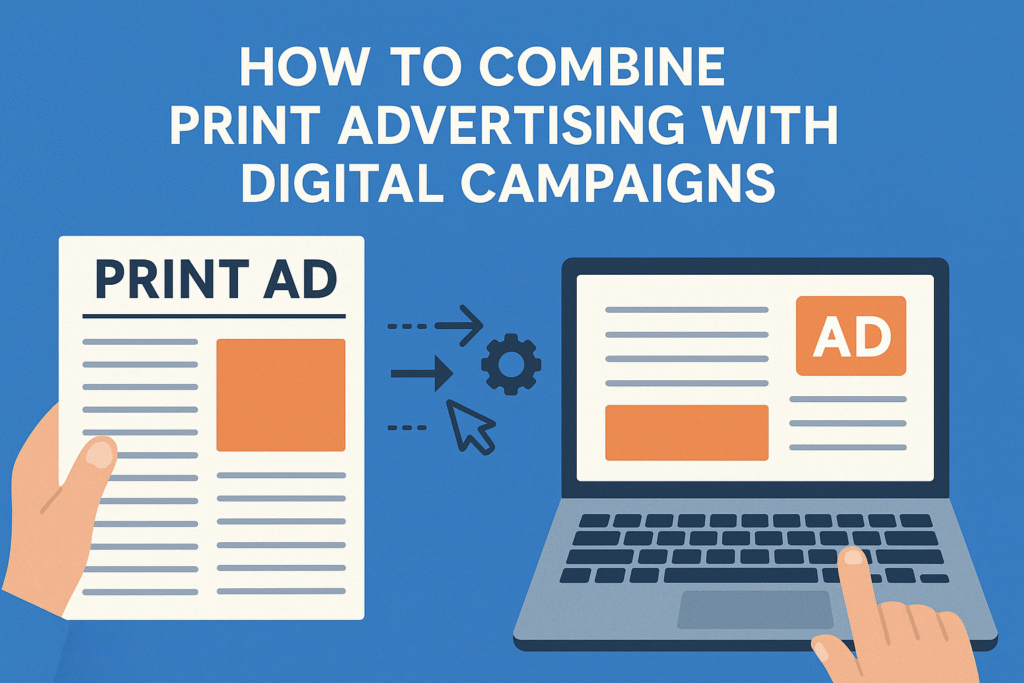
Combining print and digital gives your audience a seamless brand experience, whether they’re reading a brochure or scrolling on Instagram. This blog will explore actionable ways to integrate the two for a powerful, results-driven marketing strategy.
Why Integrate Print with Digital?
Print materials offer a tangible, trustworthy experience, while digital platforms provide measurable, targeted outreach. When used together, they:
Strengthen brand consistency across channels
Reach customers at multiple touchpoints
Improve engagement and conversion rates
Allow both online and offline tracking of results
In short, integrated marketing = greater impact.
1. Use QR Codes to Bridge the Gap
Adding QR codes to flyers, business cards, brochures, or product packaging is a simple yet effective way to guide your offline audience online. QR codes can lead to:
Product or landing pages
Discount coupons
App downloads
Event registration pages
Customer review platforms
Tip: Use dynamic QR codes to change the destination without reprinting materials.
2. Drive Online Sales with Print Offers
Incentivize action with exclusive print-only discounts that customers redeem online. For example:
“Use code PRINT20 on our website for 20% off!”
“Scan this postcard for early access to our online sale.”
“Limited-time offer available only through this flyer.”
This connects offline engagement to online conversions.
3. Cross-Promote Social Media
Encourage people to follow or engage with your brand on social platforms through your print materials.
Try CTAs like:
“Follow us @yourbrand for weekly giveaways.”
“Tag us with your brochure to win a prize!”
“Scan here to see behind-the-scenes on Instagram.”
This builds community and encourages user-generated content that fuels digital reach.
4. Capture Emails via Print Campaigns
Use printed materials to grow your email list. For example:
“Scan to download our free guide.”
“Sign up online for a printable coupon”
“Join our mailing list for print-exclusive discounts”
Once you collect emails, you can follow up with newsletters, promotions, and retargeting ads.
5. Combine Geotargeted Print + Digital Ads
For local businesses, the best results often come from layering direct mail with geotargeted digital ads. Here’s how:
Send postcards to a specific ZIP code
Target Facebook or Google ads to that same area
Reinforce the message with both digital and print visibility
This improves brand recall and trust within local audiences.
6. Track Print Campaign Performance Digitally
Want to know if your flyers or catalogs are working? Track them by:
Using custom URLs (e.g., yoursite.com/offer2025)
Creating dedicated landing pages
Generating unique coupon codes
Adding UTM parameters to QR code URLs
This lets you measure how your print campaigns drive traffic, leads, and conversions online.
7. Repurpose Print Designs for Digital Use
Make your creative budget go further by adapting print content into digital formats. Examples:
Turn your brochure into an Instagram carousel
Use flyer designs in email banners
Convert catalog spreads into Pinterest pins
Use the same visuals across Facebook ads
Consistency across platforms improves brand recognition and engagement.
8. Retarget Website Visitors with Direct Mail
You can also reverse the flow—use digital data to power offline print. Tools like Facebook Custom Audiences and CRM platforms let you:
Identify online visitors who didn’t convert
Send them a printed offer or catalog via mail
Add a personal touch that email can’t replicate
This blend of personalization and print helps you recover lost leads and nurture them offline.
Final Thoughts
In the fast-paced world of digital marketing, print still has a powerful place—especially when integrated strategically. By combining the emotional impact of print with the precision of digital, businesses can create a multi-channel marketing strategy that’s stronger, smarter, and more effective.