Uncategorized

Uncategorized

How to Combine Print Advertising with Digital Campaigns

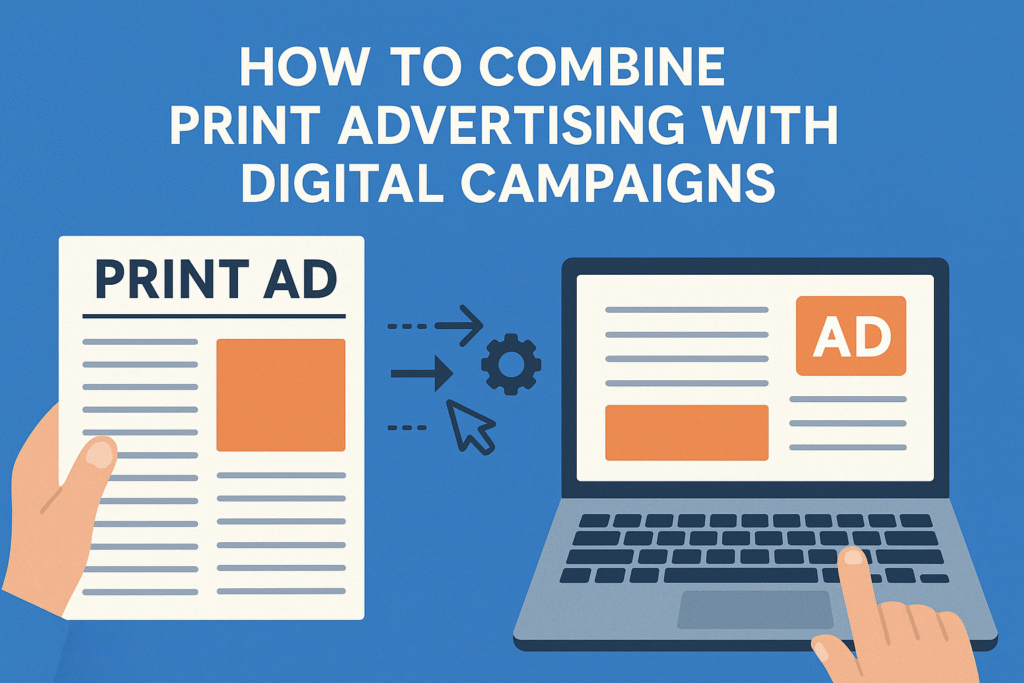
How to Combine Print Advertising with Digital Campaigns How to Combine Print Advertising with Digital Campaigns In today’s digital-first world, it’s easy to overlook traditional marketing methods like print. However, print advertising isn’t dead—it’s evolving. When used strategically, print can complement your digital campaigns and drive better engagement, higher brand recall, and even more conversions. Combining print and digital gives your audience a seamless brand experience, whether they’re reading a brochure or scrolling on Instagram. This blog will explore actionable ways to integrate the two for a powerful, results-driven marketing strategy. Why Integrate Print with Digital? Print materials offer a tangible, trustworthy experience, while digital platforms provide measurable, targeted outreach. When used together, they: Strengthen brand consistency across channels Reach customers at multiple touchpoints Improve engagement and conversion rates Allow both online and offline tracking of results In short, integrated marketing = greater impact. 1. Use QR Codes to Bridge the Gap Adding QR codes to flyers, business cards, brochures, or product packaging is a simple yet effective way to guide your offline audience online. QR codes can lead to: Product or landing pages Discount coupons App downloads Event registration pages Customer review platforms Tip: Use dynamic QR codes to change the destination without reprinting materials. 2. Drive Online Sales with Print Offers Incentivize action with exclusive print-only discounts that customers redeem online. For example: “Use code PRINT20 on our website for 20% off!” “Scan this postcard for early access to our online sale.” “Limited-time offer available only through this flyer.” This connects offline engagement to online conversions. 3. Cross-Promote Social Media Encourage people to follow or engage with your brand on social platforms through your print materials. Try CTAs like: “Follow us @yourbrand for weekly giveaways.” “Tag us with your brochure to win a prize!” “Scan here to see behind-the-scenes on Instagram.” This builds community and encourages user-generated content that fuels digital reach. 4. Capture Emails via Print Campaigns Use printed materials to grow your email list. For example: “Scan to download our free guide.” “Sign up online for a printable coupon” “Join our mailing list for print-exclusive discounts” Once you collect emails, you can follow up with newsletters, promotions, and retargeting ads. 5. Combine Geotargeted Print + Digital Ads For local businesses, the best results often come from layering direct mail with geotargeted digital ads. Here’s how: Send postcards to a specific ZIP code Target Facebook or Google ads to that same area Reinforce the message with both digital and print visibility This improves brand recall and trust within local audiences. 6. Track Print Campaign Performance Digitally Want to know if your flyers or catalogs are working? Track them by: Using custom URLs (e.g., yoursite.com/offer2025) Creating dedicated landing pages Generating unique coupon codes Adding UTM parameters to QR code URLs This lets you measure how your print campaigns drive traffic, leads, and conversions online. 7. Repurpose Print Designs for Digital Use Make your creative budget go further by adapting print content into digital formats. Examples: Turn your brochure into an Instagram carousel Use flyer designs in email banners Convert catalog spreads into Pinterest pins Use the same visuals across Facebook ads Consistency across platforms improves brand recognition and engagement. 8. Retarget Website Visitors with Direct Mail You can also reverse the flow—use digital data to power offline print. Tools like Facebook Custom Audiences and CRM platforms let you: Identify online visitors who didn’t convert Send them a printed offer or catalog via mail Add a personal touch that email can’t replicate This blend of personalization and print helps you recover lost leads and nurture them offline. Final Thoughts In the fast-paced world of digital marketing, print still has a powerful place—especially when integrated strategically. By combining the emotional impact of print with the precision of digital, businesses can create a multi-channel marketing strategy that’s stronger, smarter, and more effective.

Uncategorized

How to Create High-Converting YouTube Video Ads

How to Create High-Converting YouTube Video Ads How to Create High-Converting YouTube Video Ads YouTube is one of the most powerful platforms for digital marketing, with over 2 billion logged-in monthly users. But standing out in the noise and driving real conversions requires more than just uploading a video—it takes strategic planning, creative storytelling, and data-driven execution. If you’re an e-commerce brand or digital marketer aiming to turn views into clicks, and clicks into customers, here’s how to create high-converting YouTube video ads that deliver measurable ROI. What Makes a YouTube Ad “High-Converting”? A high-converting YouTube ad is one that: Grabs attention in seconds Connects emotionally or logically with the viewer Highlights the product’s core benefit Ends with a strong call to action (CTA) Converts viewers into buyers or leads Let’s break down the steps to create one: 1. Understand Your Audience First Before creating your ad, answer: Who is my ideal customer? What problem does my product solve for them? What language, visuals, or tone will resonate? Pro Tip: Use Google Ads’ audience insights or YouTube Analytics to identify demographics, interests, and behaviors 2. Hook Viewers in the First 5 Seconds Most YouTube ads can be skipped after 5 seconds, so make those moments count. Hook ideas: Ask a provocative question: “Still wasting money on skincare that doesn’t work?” Show the result first: Before-and-after transformation Display a bold claim or stat: “This serum sold out in 3 days…” Grab attention visually and verbally—fast. 3. Showcase the Product’s Value Clearly After the hook, get to the “what’s in it for me” part. Your ad should: Show the product in use Highlight its unique benefit Explain how it solves a problem Use real testimonials or user-generated content if possible Keep it benefit-focused, not just feature-focused. 4. Include a Strong, Clear Call-to-Action (CTA) Tell the viewer exactly what to do next: “Click the link to shop now” “Get 20% off—only today” “Subscribe to learn more” Your CTA should be: Direct (no vague language) Visible (on-screen text + spoken) Urgent (limited-time offers convert better) Pair your CTA with YouTube’s clickable overlays or end screens. 5. Keep it Short and Focused The ideal YouTube ad length: 15–30 seconds for most e-commerce and direct-response ads Up to 60–90 seconds for story-based or educational content Avoid fluff. Respect your audience’s time. 6. Use Professional Yet Relatable Visuals You don’t need a full studio setup, but your ad should: Be well-lit and clear Have high-quality audio Reflect your brand’s tone (fun, luxury, minimal, etc.) Relatable content often converts better than overproduced videos. Authenticity wins. 7. A/B Test Multiple Versions Create different versions of your ad: Different hooks Different CTAs Short vs. long format Run them as separate ad sets and compare: View rate Click-through rate (CTR) Cost per conversion Double down on what works best. 8. Track Results and Optimize Use Google Ads and YouTube Analytics to monitor: Impressions vs. views View-through rate Clicks and conversions Bounce rate from landing pages If your ad has good views but poor conversions: Fix your landing page Change your offer or CTA Adjust your targeting Bonus Tips for Higher Conversion Add subtitles: 85% of users watch videos with sound off Use bold, branded thumbnails for in-feed video ads Retarget viewers who watched but didn’t click Collaborate with influencers to boost credibility Conclusion: Make Every Second Count Creating high-converting YouTube video ads is both an art and a science. The key is to focus on your viewer’s problem, deliver value fast, and guide them toward action. With the right mix of creativity and data-driven strategy, YouTube can become a powerful engine for lead generation and online sales.

Uncategorized

Using YouTube Ads for E-Commerce: Boost Sales with Video

Using YouTube Ads for E-Commerce: Boost Sales with Video Using YouTube Ads for E-Commerce: Boost Sales with Video In today’s digital age, video content drives buying decisions—and YouTube, with over 2.5 billion monthly users, is the world’s second-largest search engine. For e-commerce brands looking to capture attention and drive conversions, YouTube Ads offer a powerful, visual way to showcase products, build trust, and boost sales. In this blog, we’ll explore how to effectively use YouTube Ads to grow your e-commerce business. Why YouTube Ads Matter for E-Commerce High intent audience: People actively search for product reviews, how-tos, and brand comparisons. Visual storytelling: Perfect for showcasing product features, benefits, and unboxing experiences. Precise targeting: YouTube allows you to target by interests, keywords, location, age, behavior, and even specific channels. Cost-effective: With skippable ads, you often only pay when viewers engage. Types of YouTube Ads You Can Use 1. Skippable In-Stream Ads Play before/during/after other videos. Viewers can skip after 5 seconds. Great for brand awareness and product showcases. 2. Non-Skippable In-Stream Ads Must be watched in full (15 seconds). Ideal for impactful messages or new product launches. 3. Bumper Ads 6-second non-skippable ads. Perfect for short, memorable promotions or branding. 4. In-Feed Video Ads (formerly Discovery Ads) Appear in search results and alongside related videos. Great for tutorials, reviews, or deeper product insights. How to Use YouTube Ads to Boost E-Commerce Sales 1. Create a Compelling Video Ad Your video ad should: Grab attention in the first 5 seconds Clearly highlight your product’s benefits Include a strong CTA (e.g., “Shop Now,” “Visit Our Website”) Showcase social proof like reviews or testimonials Pro tip: Keep the tone aligned with your audience—use humor, storytelling, or emotion if it fits your brand. 2. Use Smart Targeting YouTube offers robust targeting options: Custom Intent Audiences – target users searching for specific products Remarketing – show ads to people who visited your website Lookalike Audiences – reach people similar to your past buyers Placement Targeting – advertise on competitor product review videos This ensures your ad reaches users who are more likely to convert. 3. Send Viewers to a High-Converting Landing Page Make sure your ad links to a dedicated product page or offer, not just your homepage. Your landing page should: Match the ad’s message Load fast on mobile Highlight the product’s value clearly Have a visible “Buy Now” button 4. Use YouTube Shopping Ads (If Available) If you’re using Google Merchant Center, you can connect your product feed to display your actual products beneath your video ad. This allows viewers to click and shop directly from the ad. 5. Test and Optimize Don’t just run one video ad. Test different: Intros and CTAs Audiences and placements Video lengths and styles Track results using Google Ads and YouTube Analytics, focusing on: View rate Click-through rate (CTR) Conversion rate Cost per acquisition (CPA) Real-World Success Example Let’s say you’re selling skincare products. A 15-second in-stream ad showing a customer using your face serum, before-and-after results, and a discount code can lead users directly to a purchase page. Pair it with retargeting ads, and you’ve got a mini sales funnel running 24/7. Final Thoughts YouTube Ads are no longer just for big brands with big budgets. E-commerce startups and mid-sized businesses can use YouTube Ads to drive measurable sales growth—as long as they create value-driven content, target the right audience, and optimize continuously. Video is the future of shopping. If your products are worth seeing, they’re worth promoting on YouTube.

Uncategorized

How Startups Can Leverage Digital Marketing for Rapid Growth

How Startups Can Leverage Digital Marketing for Rapid Growth How Startups Can Leverage Digital Marketing for Rapid Growth In the fast-paced world of startups, growth isn’t just a goal—it’s a necessity. With limited budgets and intense competition, traditional marketing avenues often fall short. That’s where digital marketing steps in as a game-changer. It offers startups the power to reach global audiences, build strong brands, and scale quickly—all at a fraction of the cost of traditional media. Here’s how startups can harness digital marketing to fuel their rapid growth: 1. Define a Clear Digital Marketing Strategy The first step is clarity. Startups must outline their goals—increasing brand awareness, generating leads, or boosting sales. Your digital marketing strategy should include: Target audience persona Key marketing channels (SEO, social media, email, etc.) Content themes Budget allocation KPIs and metrics to track success Without a strategy, you risk wasting time and resources. 2. Build a High-Converting Website Your website is the digital storefront of your startup. It should: Load quickly Be mobile-responsive Clearly communicate your value proposition Include strong calls-to-action (CTAs) Be SEO-optimized to rank well on Google Investing in user experience (UX) design can significantly boost conversion rates. 3. Focus on Search Engine Optimization (SEO) SEO is one of the most cost-effective long-term strategies. By optimizing your website and content for relevant keywords, you can attract organic traffic from people actively searching for your solutions. Key SEO areas: Keyword research On-page optimization (titles, meta tags, internal links) Quality content creation Backlink building Startups that rank well on Google can gain visibility without constantly paying for ads. 4. Create Valuable, Shareable Content Content marketing builds trust and positions your startup as a thought leader. You can start a blog, create infographics, shoot videos, or offer free resources like eBooks or templates. Effective content: Solves your audience’s pain points Answers their questions Is optimized for SEO and social media sharing Content doesn’t just generate leads—it nurtures them through your funnel. 5. Utilize Paid Advertising for Immediate Reach While SEO and content take time, paid ads (Google Ads, Meta Ads, LinkedIn Ads) can generate fast results. Startups should: Target niche audiences Run A/B tests Use retargeting ads to bring users back Track ROI closely Paid ads work best when used alongside organic strategies. 6. Leverage Social Media for Community and Awareness Social media is powerful for building a loyal customer base. Choose platforms that align with your audience (e.g., Instagram for B2C, LinkedIn for B2B). Tips for startups: Post consistently with valuable content Engage with your audience (polls, replies, DMs) Partner with micro-influencers Use social listening to track brand sentiment A strong social presence humanizes your brand and encourages word-of-mouth. 7. Build and Nurture an Email List Email marketing remains one of the highest ROI digital channels. Startups can grow their list by offering lead magnets and then nurturing subscribers with: Welcome series Product updates Educational content Personalized offers Use segmentation and automation to deliver relevant messages at the right time. 8. Analyze, Iterate, and Optimize Digital marketing allows real-time tracking. Use tools like Google Analytics, Meta Business Suite, and Hotjar to measure: Traffic sources Conversion rates Bounce rates Funnel drop-offs Startups that test and tweak their strategies regularly achieve better results faster. Conclusion Digital marketing offers startups a unique edge: the ability to scale efficiently and reach customers worldwide. By combining SEO, content marketing, social media, email, and paid ads with clear tracking, startups can build momentum and grow rapidly—even on a lean budget. Start small, stay consistent, and always prioritize value for your audience. The results will follow.

Uncategorized

How to Choose the Right Digital Marketing Agency in Pakistan

How to Choose the Right Digital Marketing Agency in Pakistan How to Choose the Right Digital Marketing Agency in Pakistan In today’s highly competitive online landscape, choosing the right digital marketing agency in Pakistan can make or break your business growth. Whether you’re a startup, SME, or a large enterprise, the agency you partner with plays a vital role in your brand’s online success. But with so many digital marketing companies out there, how do you know which one is the right fit for your goals? In this blog, we’ll walk you through the key factors to consider when selecting a digital marketing agency in Pakistan that aligns with your vision and delivers measurable results. 1. Understand Your Business Needs Before reaching out to agencies, define what you’re looking for. Are you aiming to: Improve your search engine ranking? Boost sales through paid ads? Build a social media presence? Generate leads through content marketing? Knowing your goals will help you find an agency that specializes in those areas. 2. Check Their Expertise and Services Look for an agency that offers a complete suite of services including: SEO (Search Engine Optimization) Social Media Marketing (SMM) Google Ads & Facebook Ads Content Creation Email Marketing Web Design and Development Agencies with a diverse skill set are more capable of providing a tailored strategy that integrates multiple channels effectively. 3. Review Their Portfolio and Case Studies A credible agency should have a proven track record. Ask for: Case studies Client testimonials Campaign performance reports Evaluate whether they have worked with businesses in your industry or similar niches in Pakistan. 4. Evaluate Their Online Presence A digital marketing agency should practice what they preach. Check their: Website design and SEO Social media activity Blog quality Search engine visibility If they can’t market themselves effectively, they may not be able to market your business well either. 5. Ask About Tools and Technologies A good agency will use modern tools for: SEO analysis (e.g., Ahrefs, SEMrush) Social media scheduling (e.g., Buffer, Hootsuite) Ad performance tracking (e.g., Google Analytics, Facebook Ads Manager) This reflects professionalism and a results-driven approach. 6. Transparency and Reporting Make sure the agency provides regular reports and keeps you informed about: Campaign progress ROI KPI tracking Ask how often they’ll communicate and how they handle performance reviews. 7. Compare Pricing and Packages Pricing in Pakistan’s digital marketing landscape can vary significantly. Get quotes from multiple agencies and compare: What’s included in their monthly package? Are there any hidden charges? Do they offer customizable plans? Avoid choosing the cheapest option; instead, focus on value for money. 8. Meet the Team Request a consultation call or in-person meeting. This helps you understand their: Work culture Responsiveness Strategic thinking A collaborative and experienced team is essential for long-term success. 9. Ask About Strategy, Not Just Execution An agency should offer strategic insight, not just routine execution. Ask: How will they help you stand out from competitors? How do they adapt strategies based on market changes? A good agency will act as a partner, not just a service provider. 10. Check Reviews and Reputation Look up the agency’s: Google reviews Clutch or GoodFirms ratings Social proof on LinkedIn or Facebook Authentic reviews from Pakistani clients are a great indicator of trustworthiness. Final Thoughts Choosing the right digital marketing agency in Pakistan takes research, patience, and clear communication. Look for an agency that understands your business, has a strong portfolio, and is committed to helping you grow through data-driven strategies. When you find the right partner, digital marketing can take your brand to the next level.

Uncategorized

Why SEO is Essential for Business Growth in 2025

Why SEO is Essential for Business Growth in 2025 Why SEO is Essential for Business Growth in 2025 In today’s digital-first world, search engine optimization (SEO) is a critical driver of business growth. A strong SEO strategy enhances your online presence, attracts more visitors to your website, and converts them into loyal customers. But how exactly does SEO fuel business success? Let’s break it down. What is SEO? SEO (search engine optimization) is the process of optimizing your website to rank higher in organic (non-paid) search engine results. By improving your site’s visibility, SEO helps potential customers find you when they search for relevant products, services, or information. Unlike paid ads, SEO delivers long-term, sustainable traffic without ongoing ad spend. A well-rounded SEO strategy includes: 1. On-Page SEO Optimizing elements within your website Keyword placement in titles, headers, and content High-quality, engaging content tailored to user intent Meta descriptions, image alt text, and internal linking 2. Off-Page SEO Factors outside your website that influence rankings, including: Backlinks from authoritative sites Social media mentions and brand reputation Online reviews and local citations 3. Technical SEO Improving your site’s backend performance for better crawling and indexing: Fast page loading speeds Mobile-friendly design Secure HTTPS protocol Structured data markup Specialized SEO Strategies Some businesses require additional SEO tactics: Local SEO – Optimizing for location-based searches (e.g., “best coffee shop near me”) Enterprise SEO – Large-scale optimization for competitive industries Since 80% of local searches come from mobile devices, a digital marketing agency ensures: 8 Ways SEO Drives Business Growth 1. Boosts Online Visibility With billions of daily Google searches, ranking higher means more people see your brand. Over 53% of website traffic comes from organic search—making SEO a must for exposure. 2. Attracts High-Intent Customers SEO targets users actively searching for your products or services. By optimizing for the right keywords, you attract visitors who are more likely to convert. 3. Builds Trust & Credibility Websites ranking on Page 1 of Google are perceived as more trustworthy. Strong SEO signals authority, improving brand reputation. 4. Delivers Cost-Effective Marketing Unlike paid ads, SEO provides long-term results without continuous spending. Once you rank, you keep getting traffic without extra costs. 5. Enhances User Experience (UX) SEO improves site speed, mobile responsiveness, and navigation—leading to lower bounce rates and higher engagement. 6. Outperforms Competitors Businesses investing in SEO dominate search results, leaving competitors behind. If you’re not optimizing, your rivals are. 7. Supports Content Marketing Success SEO and content work hand-in-hand. Optimized blogs and guides attract traffic, establish expertise, and nurture leads. 8. Drives Conversions & Revenue More targeted traffic = more leads and sales. A well-optimized site guides visitors toward purchases, sign-ups, or inquiries Final Thoughts: SEO is a Growth Engine SEO isn’t just about ranking—it’s about attracting the right audience, building trust, and increasing revenue. Businesses prioritizing SEO gain a competitive edge, ensuring long-term success in an increasingly digital marketplace. Need Help with SEO? Looking for a SEO expert to improve your Google rankings? Contact Markedia today to start ranking higher and attracting more customers!

Uncategorized

Local SEO Strategies: How Digital Marketing Agencies Help Small Businesses

Local SEO Strategies: How Digital Marketing Agencies Help Small Businesses Local SEO Strategies: How Digital Marketing Agencies Help Small Businesses In today’s digital world, small businesses need Local SEO (Search Engine Optimization) to stay competitive and attract customers from their target areas. Whether you own a restaurant, retail store, clinic, or service-based business, ranking high in local search results can significantly boost your visibility and sales. However, optimizing for local searches requires specialized strategies, and this is where digital marketing agencies play a crucial role. They implement effective Local SEO techniques to help small businesses rank higher on Google, improve website traffic, and generate more leads. Let’s explore the best Local SEO strategies and how digital marketing agencies help small businesses thrive in their communities. 1. What is Local SEO and Why is it Important? Local SEO is the process of optimizing a business’s online presence to appear in local search results. When people search for services “near me” or within a specific city, Google prioritizes local businesses. For example, if someone searches for “best coffee shop in Karachi”, Google will show results based on business proximity, relevance, and credibility. Why is Local SEO important for small businesses? Increases online visibility in local searches Attracts nearby customers who are ready to buy Boosts foot traffic to physical stores Improves credibility and trust through online reviews Higher conversions as local searches often lead to purchases With 46% of Google searches being local, investing in Local SEO strategies is essential for small businesses. 2. Key Local SEO Strategies Used by Digital Marketing Agencies A. Google My Business (GMB) Optimization One of the most powerful Local SEO tools is Google My Business (GMB). A digital marketing agency ensures that your GMB profile is: Fully optimized with correct business name, address, and phone number (NAP) Updated regularly with business hours, website link, and services Enhanced with high-quality images of products, office, or storefront Engaging with customer reviews and quick responses A well-optimized GMB profile increases your chances of appearing in Google’s Local Pack—the top three business listings that get the most clicks. B. Local Keyword Optimization A digital marketing agency conducts thorough keyword research to find local search terms such as: “Best bakery in Lahore” “Affordable plumbing services in Karachi” “Top digital marketing agency in Pakistan” These keywords are strategically placed in: Website content and blog posts Meta titles and descriptions GMB descriptions and posts Image alt texts By using geo-specific keywords, businesses rank higher for local searches and attract the right audience. C. Local Citations and Directory Listings A local citation is any online mention of a business’s name, address, and phone number (NAP). Digital marketing agencies ensure your business is listed on high-authority directories, including: Google My Business Yelp Facebook Business Yellow Pages Local.pk Consistent and accurate NAP details boost credibility and local search rankings. D. Online Reviews and Reputation Management Positive reviews improve rankings and influence customer decisions. A digital marketing agency helps businesses: Encourage happy customers to leave Google reviews Respond professionally to negative reviews Highlight top reviews on social media and websites Businesses with higher ratings and more reviews rank above competitors in local searches. E. Mobile Optimization & Fast-Loading Website Since 80% of local searches come from mobile devices, a digital marketing agency ensures: Mobile-friendly website design Fast page loading speed Clickable phone numbers and addresses Seamless user experience A smooth mobile experience increases conversions and helps businesses rank higher in local search results. F. Localized Content Marketing Publishing location-specific blog posts helps businesses attract local customers. Agencies create content like: “Top 10 Restaurants in Islamabad” “Best Digital Marketing Services in Karachi” “How to Choose the Best Dentist in Lahore” By integrating local keywords, these blogs boost organic rankings and establish authority in the industry. G. Social Media Engagement for Local Branding Social media signals impact Local SEO rankings. A digital marketing agency manages: Geo-tagged posts on Facebook and Instagram Engagement with local customers through comments and shares Social media ads targeting local audiences Active social media presence builds brand recognition and drives more local traffic to businesses. 3. The Role of a Digital Marketing Agency in Local SEO Success A digital marketing agency specializes in implementing and managing Local SEO strategies to help businesses rank higher and get more customers. Benefits of hiring a Local SEO agency: Saves time and effort with expert optimization Better results with data-driven strategies Continuous monitoring and updates for improved rankings Customized strategies based on business type and location With the right Local SEO approach, businesses can dominate their local market and increase revenue. Final Thoughts: Why Small Businesses Must Invest in Local SEO In today’s digital world, customers search online before visiting local businesses. If your business is not optimized for local searches, you’re losing potential customers to competitors. A digital marketing agency ensures your business: Appears on Google’s first page for local searches Gains higher credibility and trust through reviews Attracts more website visitors and walk-in customers Stays ahead of competitors in the local market If you own a small business, now is the time to invest in Local SEO services to grow your brand and increase sales. Need Help with Local SEO? Looking for a Local SEO expert to improve your Google rankings? Contact Markedia today to start ranking higher and attracting more customers!

Uncategorized

Why Your Business Needs PPC Advertising

Why Your Business Needs PPC Advertising Why Your Business Needs PPC Advertising: The Role of a Digital Marketing Agency In today’s competitive digital landscape, businesses need a powerful marketing strategy to attract customers, generate leads, and boost sales. Pay-Per-Click (PPC) advertising is one of the fastest and most effective ways to achieve these goals. Whether you’re a small business or a large enterprise, PPC campaigns can drive targeted traffic to your website, improve brand awareness, and deliver measurable results. However, managing a PPC campaign requires expertise, data analysis, and continuous optimization—this is where a digital marketing agency plays a crucial role. Let’s explore why your business needs PPC advertising and how a digital marketing agency can help you maximize your return on investment (ROI). 1. What is PPC Advertising? Pay-Per-Click (PPC) advertising is a digital marketing model where advertisers pay a fee each time someone clicks on their ad. It allows businesses to instantly appear on top of search results, social media platforms, and other digital channels. Popular PPC platforms include: Google Ads (Search Ads, Display Ads, YouTube Ads) Facebook & Instagram Ads LinkedIn Ads TikTok & Twitter Ads Amazon Advertising With the right PPC strategy, businesses can reach their target audience at the right time and place while only paying for actual clicks. 2. Why Your Business Needs PPC Advertising A. Instant Visibility & Traffic Unlike SEO (which takes time to show results), PPC delivers immediate visibility on search engines and social media. With a well-optimized ad campaign, your website can appear on the first page of Google within hours. B. Highly Targeted Advertising PPC allows businesses to target the right audience based on: Keywords & Search Intent Location & Geographic Targeting Age, Gender, & Demographics Interests & Online Behavior Device (Mobile, Desktop, Tablet) This ensures that your ads reach potential customers actively searching for your products or services. C. Cost-Effective Marketing with High ROI With PPC, you only pay when someone clicks on your ad. This means your budget is used efficiently to drive high-intent traffic. A digital marketing agency optimizes ad performance to ensure maximum ROI from your campaigns. D. Better Brand Awareness Even if users don’t click your ad, they still see your brand name and message on top of search results. This increases brand recall and makes them more likely to choose you in the future. E. Performance Tracking & Measurable Results PPC platforms provide detailed analytics and insights, allowing businesses to track: Clicks & Impressions Conversion Rates Cost-Per-Click (CPC) & Return on Ad Spend (ROAS) Audience Engagement This data-driven approach ensures continuous improvement and better marketing decisions. 3. How a Digital Marketing Agency Maximizes PPC Success Managing a successful PPC campaign requires experience, research, and ongoing optimization. A digital marketing agency helps businesses get the best results with expert strategies. A. Keyword Research & Campaign Strategy Identifying high-performing keywords Defining target audience & demographics Setting clear budget & campaign objectives A PPC agency ensures your ads appear for the most profitable searches to maximize conversions. B. Ad Copywriting & Creative Design Writing compelling ad copy that attracts clicks Designing high-converting visuals for display & social media ads A/B testing different ad variations to find the best-performing ones A strong ad copy & design increases engagement and lowers the cost per click. C. Landing Page Optimization Creating fast, mobile-friendly landing pages Improving call-to-action (CTA) buttons Optimizing pages for higher conversions & lead generation A well-optimized landing page ensures that clicks turn into paying customers. D. Budget Management & Bid Strategy Optimizing daily ad spend to avoid overspending Adjusting bids based on performance data Maximizing Cost-Per-Click (CPC) efficiency Agencies ensure you get the highest ROI while staying within budget. E. Continuous Performance Monitoring & Reporting Tracking real-time ad performance Adjusting strategy based on data insights Identifying new growth opportunities A PPC agency continuously improves campaigns to increase effectiveness and profitability. Conclusion: Why Your Business Needs a Digital Marketing Agency for PPC PPC advertising is a powerful tool that drives traffic, increases brand visibility, and generates leads. However, to get the best results, expert management is essential. A digital marketing agency ensures: Optimized campaigns for better ROI Lower cost-per-click & higher conversions Data-driven strategies & continuous improvements Want to scale your business with PPC advertising? Partner with Markedia today and start generating high-quality leads!

Uncategorized

The Role of a Marketing Agency in Growing Businesses

The Role of a Marketing Agency in Growing Businesses The Role of a Marketing Agency in Growing Businesses In today’s highly competitive business landscape, brands need effective marketing strategies to stay ahead. Whether you run a small business, startup, or a large enterprise, hiring a top marketing agency can be the key to long-term success. A marketing agency offers SEO services, social media marketing, content marketing, PPC advertising, email marketing, and branding solutions to help businesses grow. From increasing brand visibility to generating sales, a digital marketing agency plays a crucial role in business growth. This blog explores the importance of a marketing agency, the key marketing services it offers, and how it helps businesses succeed. 1. Building a Strong Brand Identity Branding is the foundation of a successful business. A marketing agency helps create a strong brand identity that resonates with customers. How a Marketing Agency Builds a Brand: Logo & Visual Identity – Designing a professional logo, color scheme, and brand aesthetics. Brand Messaging – Defining your brand voice, tagline, and value proposition. Website Development – Creating a user-friendly, SEO-optimized website. Content Strategy – Crafting engaging blogs, videos, and social media posts. A well-established brand identity increases customer trust and recognition, making businesses stand out. 2. Increasing Brand Awareness & Online Visibility A top marketing agency ensures that your business reaches the right audience through various digital channels. Without a strong online presence, businesses struggle to attract customers. Marketing Strategies to Boost Brand Awareness: Search Engine Optimization (SEO) – Optimizing your website to rank higher on Google for high-traffic keywords. Social Media Marketing (SMM) – Creating viral content, running paid ads, and engaging with audiences on Facebook, Instagram, LinkedIn, and TikTok. Google Ads & Facebook Ads – Running targeted PPC advertising to drive traffic and conversions. Influencer Marketing – Collaborating with popular influencers to promote your brand. By leveraging these marketing strategies, businesses gain more visibility, website traffic, and customer engagement. 3. Lead Generation & Customer Acquisition One of the primary roles of a marketing agency is to generate leads and convert them into paying customers. With effective digital marketing strategies, businesses can attract high-intent buyers. How a Marketing Agency Generates Leads: SEO-Optimized Website – Attracting organic traffic from Google searches. Landing Pages & Lead Magnets – Capturing leads through e-books, free trials, and webinars. Email & SMS Marketing – Engaging potential customers with personalized campaigns. Retargeting Ads – Running ads for users who previously visited the website but didn’t convert. With these strategies, businesses increase their customer base and maximize revenue. 4. SEO (Search Engine Optimization) for Organic Growth SEO is a long-term strategy that improves website rankings and drives free traffic. A digital marketing agency ensures businesses rank on Google for relevant search terms. SEO Strategies Used by a Marketing Agency: On-Page SEO – Optimizing website content, meta tags, and internal linking. Off-Page SEO – Building backlinks from authoritative websites. Local SEO – Optimizing Google My Business for local searches like “best marketing agency near me.” Technical SEO – Enhancing website speed, mobile-friendliness, and security. With effective SEO services, businesses gain higher rankings, more clicks, and better conversions. 5. Social Media Marketing for Customer Engagement With billions of active users on Facebook, Instagram, LinkedIn, Twitter, and TikTok, social media marketing is essential for business growth. How a Marketing Agency Enhances Social Media Presence: Content Creation – Designing high-quality posts, reels, and videos. Community Engagement – Responding to comments, messages, and reviews. Hashtag Optimization – Using trending hashtags for maximum reach. Paid Social Media Ads – Running Facebook and Instagram ads for targeted exposure. A social media marketing agency helps businesses increase followers, engagement, and sales through strategic campaigns. 6. PPC Advertising for Quick Results While SEO takes time, Pay-Per-Click (PPC) advertising offers instant visibility. A Google Ads agency manages campaigns to drive high-quality traffic to your website. Benefits of PPC Advertising: Immediate Results – Start generating leads and sales instantly. Highly Targeted Ads – Reach specific audiences based on age, location, and interests. Budget Control – Set daily ad spend limits to optimize ROI. Performance Tracking – Monitor ad metrics for better results. A marketing agency ensures businesses get the best ROI from Google Ads and Facebook Ads. 7. Content Marketing to Build Authority High-quality content educates customers, builds trust, and improves SEO rankings. A content marketing agency creates blogs, videos, infographics, and case studies that attract and convert customers. Why Content Marketing is Important: Boosts SEO Rankings – Well-written blogs improve Google search rankings. Increases Engagement – Informative content attracts more website visitors. Builds Brand Authority – Expert content positions businesses as industry leaders. Drives Conversions – Product guides and case studies help close sales. With the right content strategy, businesses establish long-term customer relationships. 8. Data-Driven Marketing Strategies A digital marketing agency uses analytics and performance tracking to refine marketing strategies. How Data Helps Improve Marketing Performance: Website Analytics – Tracking visitor behavior and conversion rates. Ad Performance Analysis – Optimizing ad campaigns for better ROI. SEO Reports – Identifying top-performing keywords. Social Media Insights – Understanding audience engagement. With data-driven decisions, marketing agencies maximize results and minimize costs. Conclusion: Why Every Business Needs a Marketing Agency A marketing agency is essential for businesses looking to grow, scale, and succeed in today’s digital world. From SEO and social media marketing to PPC advertising and branding, a digital marketing agency provides the expertise needed for sustainable growth. Key Takeaways: A marketing agency helps businesses build a strong brand identity. SEO and content marketing improve online visibility and organic traffic. Social media marketing and PPC advertising drive customer engagement. Data-driven strategies ensure maximum ROI and business success. Looking for the Best Marketing Agency? If you want to grow your business with expert digital marketing services, it’s time to partner with a top marketing agency and take your brand to the next level!

Uncategorized

Why Hiring a Marketing Agency in Karachi is Essential for Your Brand

Why Hiring a Marketing Agency in Karachi is Essential for Your Brand Why Hiring a Marketing Agency in Karachi is Essential for Your Brand In today’s fast-paced digital world, businesses in Pakistan, especially in Karachi, need a strong marketing strategy to stay ahead of the competition. Whether you are a startup or an established brand, hiring a top marketing agency in Karachi, Pakistan can make all the difference in your business growth. From digital marketing services to social media marketing, an experienced marketing agency in Karachi ensures your brand reaches the right audience, generates leads, and maximizes revenue. If you are wondering whether to outsource your marketing or build an in-house team, partnering with a professional marketing agency in Karachi is the best decision for your brand. 1. Expertise in Digital Marketing & Industry Trends A top marketing agency in Karachi has a team of experienced professionals who specialize in SEO, PPC, social media marketing, content marketing, and branding. They stay updated with the latest digital marketing trends in Pakistan, ensuring your brand remains competitive in the online world. Marketing services offered by agencies in Karachi include: Search Engine Optimization (SEO) – Boosting your website’s ranking on Google Social Media Marketing (SMM) – Engaging your audience on Facebook, Instagram, LinkedIn, and TikTok Pay-Per-Click Advertising (PPC) – Running Google Ads and Facebook Ads for lead generation Content Marketing – Creating high-quality blog posts, videos, and graphics Email & SMS Marketing – Reaching potential customers directly By hiring a digital marketing agency in Karachi, you gain access to top industry experts who know what works best for businesses in Pakistan. 2. Cost-Effective Alternative to In-House Marketing Teams Many businesses assume that hiring an in-house marketing team is more effective than outsourcing to a marketing agency in Karachi, Pakistan. However, this often leads to higher costs and limited expertise. When you work with a full-service marketing agency in Karachi, you eliminate expenses related to: Employee salaries and benefits Training and skill development Marketing software and tools Trial and error in marketing strategies Instead of relying on a small in-house team, a digital marketing company in Karachi provides access to SEO experts, graphic designers, social media managers, content writers, and PPC specialists at an affordable cost. 3. Increased Brand Awareness & Online Visibility With the rise of e-commerce in Pakistan, businesses must establish a strong online presence to attract customers. A digital marketing agency in Karachi helps your brand get noticed by: Optimizing your website for SEO to rank on Google’s first page Running social media campaigns to increase brand awareness Creating engaging video content for YouTube, Facebook, and Instagram Implementing influencer marketing to reach a wider audience If your brand isn’t leveraging digital marketing, you are missing out on potential customers in Karachi and across Pakistan. 4. Better Social Media Marketing & Engagement With millions of Pakistanis using social media platforms like Facebook, Instagram, and LinkedIn, social media has become a powerful tool for business growth. However, managing social media accounts effectively requires expertise. A social media marketing agency in Karachi ensures: Consistent content posting with engaging visuals Targeted Facebook and Instagram ads for maximum ROI Hashtag and keyword optimization for better reach Influencer collaborations to boost brand credibility Without a proper social media marketing strategy, brands struggle to connect with their audience. That’s why hiring a top marketing agency in Karachi, Pakistan is essential for social media success. 5. Data-Driven Strategies for Higher Conversions One of the key advantages of hiring a marketing agency in Karachi is the data-driven approach they use. Professional agencies track, analyze, and optimize marketing campaigns for maximum return on investment (ROI). SEO experts analyze keyword rankings to improve website traffic PPC specialists monitor ad performance to reduce cost-per-click (CPC) Social media managers track engagement metrics to improve content strategy With real-time data and analytics, a digital marketing agency in Karachi ensures that every marketing rupee is spent effectively. 6. Local Market Knowledge & Cultural Understanding Unlike international agencies, a local marketing agency in Karachi understands the Pakistani audience, culture, and market trends. This knowledge helps businesses create personalized marketing campaigns that resonate with customers. Examples of localized marketing strategies include: Using Urdu & English content to connect with diverse audiences Promoting offers around Pakistani events like Eid, Ramadan, and Independence Day Partnering with Pakistani influencers for local brand promotions A digital marketing agency in Karachi, Pakistan knows how to target the right audience with the right message, ensuring your business stays relevant and successful. 7. Business Growth & Competitive Advantage Marketing is not just about running ads—it’s about long-term business growth. A top marketing agency in Karachi creates strategies that: Increase brand recognition Drive more website traffic Convert leads into customers Retain existing customers with loyalty programs With Karachi’s highly competitive business environment, working with a marketing agency ensures that your brand stays ahead of competitors. Final Thoughts – Why a Top Marketing Agency in Karachi is a Smart Investment Whether you’re a startup, small business, or large corporation, partnering with a marketing agency in Karachi is a game-changer. From SEO and social media marketing to paid advertising and branding, professional agencies offer comprehensive marketing solutions to help your brand succeed.

Scroll to Top